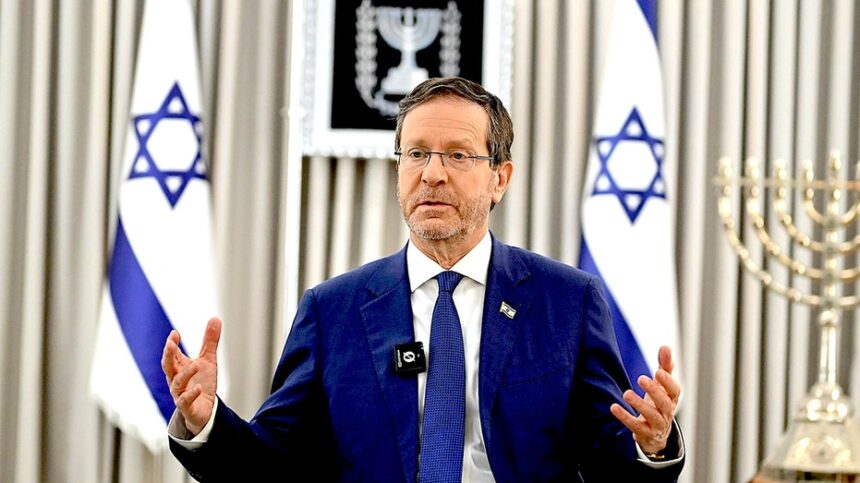
Israeli President Isaac Herzog announced Saturday that he has chosen opposition leader Gadi Eisenkot to form the country’s next government, handing Prime Minister Benjamin Netanyahu’s chief rival the first opportunity to build a coalition following an inconclusive national election.
Herzog announced his decision on Nov. 7, but the formal presentation of the mandate is scheduled for Sunday, November 8, at 5 p.m. Israeli time. Eisenkot will then have 28 days to assemble a government, with a possible 14-day extension.
The decision could mark a significant step toward ending Netanyahus tenure, but it would also launch a difficult round of coalition negotiations, with deep disagreements among parties seeking to replace him.
NETANYAHU DEFIES EXIT POLLS AS VOTE SHIFTS IN HIS FAVOR, BUT MAJORITY REMAINS ELUSIVE
Following two days of consultations with Israels newly elected parliament, Herzog announced Thursday that factions representing 67 of the Knessets 120 members had recommended Eisenkot, chairman of the Yashar party, to form the next government. Netanyahu received the backing of 46 lawmakers, while seven members of the ultra-Orthodox United Torah Judaism party declined to endorse either candidate.
“The results of the consultations may appear clear,” Herzog said in his Nov. 5 statement, but cautioned that competing political demands and vetoes have left the prospects for forming a government uncertain.
The challenge facing Eisenkot is that the 67 endorsements do not translate into a 67-seat governing coalition.
In the October 27 election, Netanyahus Likud emerged as the largest single party with 27 seats, while his wider political bloc won 53. The four-party alliance seeking to replace him secured just 48 seats.
The remaining endorsements for Eisenkot came from two Arab-led parties, the Joint List and Raam, which together hold 19 seats. Although both recommended Eisenkot to the president, their support presents a dilemma for some of his prospective coalition partners, who have ruled out depending on Arab parties to establish a government.
NETANYAHU GAINS OVERNIGHT AS ISRAEL ELECTION HEADS TOWARD POLITICAL DEADLOCK
In a lengthy statement Friday, Eisenkot outlined his plan to establish what he called a National Emergency Government, initially based on the four parties committed to replacing Netanyahu, while leaving the door open for additional parties and lawmakers to join.
“Israel is facing a genuine, tangible and dangerous national emergency,” Eisenkot said. He accused the outgoing government of threatening Israeli democracy and warned that continued political instability could deepen the country’s security and diplomatic challenges.
Eisenkot said negotiations with his political partners had already produced significant progress and that further talks were underway.
His proposed government would be based on four founding principles: recognition of Israel as a Jewish and democratic state; acceptance of the values of Israels Declaration of Independence; universal military, national or civilian ser